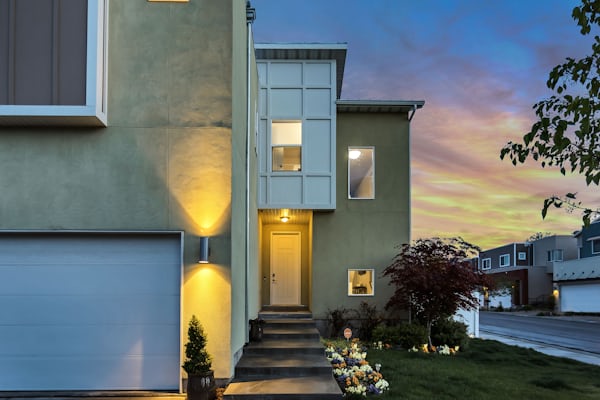
01 Entry basis
Acquisition cost below replacement cost.
Most Upstate housing stock trades well below the cost of new construction. That gap is the structural margin a properly scoped renovation captures — and a floor under the exit.
Strategy
We invest in residential real estate across Upstate New York — with particular depth in lakefront and high-end residential in the Finger Lakes and Western NY. Every dollar runs through the same underwriting bar.
The thesis
01 Entry basis
Most Upstate housing stock trades well below the cost of new construction. That gap is the structural margin a properly scoped renovation captures — and a floor under the exit.
02 Anchored demand
Healthcare systems, university campuses, state government, and a growing manufacturing base keep rental and resale demand stable across the corridor.
03 Execution edge
Scope discipline, real contractor pricing, and a measured contingency are the difference between a deal that pencils and one that doesn’t. We underwrite each line explicitly.
04 Local network
Fifteen years in Western New York and the Finger Lakes. The right GC, attorney, and inspector make the difference between a clean close and a re-trade — especially on lakefront and high-end work where the buyer pool is smaller and the finish bar is higher.
A particular focus on lakefront properties across the Finger Lakes — Seneca, Cayuga, Keuka, Canandaigua, Owasco — and high-end residential across the Rochester, Buffalo, and Canandaigua submarkets.
The underwriting bar
Every opportunity — a property we’re buying, a deal we’re funding, or a joint venture we’re considering — runs through the same five-point filter.
Deployment detail
01
Direct acquisition
We buy, we renovate, we sell or rent. Cash offers, 14–21 day closings, no financing contingency. We control the property, the scope, and the exit. Most of these are single-family fix-and-flip; a smaller share roll into our hold portfolio.
02
Capital partner
We fund acquisition and rehab capital to qualified operators on their own deals. Terms are priced to deal quality, secured by the real estate, drawn against scope, and released on inspection. Term sheets within 72 hours of a clean package.
03
Equity partner
For deals that warrant equity — larger projects, more complex scopes, or operators we’ve worked with repeatedly — we take a joint-venture position against a defined waterfall. Both sides sign off on the scope. Both sides have line-of-sight to the same numbers.
Nothing on this page constitutes an offer to sell or solicitation of an offer to buy any security. Any securities offering would be made only through definitive offering documents to qualified investors. Return targets are forward-looking and not guaranteed; actual outcomes depend on market conditions and execution.
Typical arc
Not every deal follows the same arc, but most of our fix-and-flip projects look something like this.
Frequently asked
Single-family houses, duplexes, triplexes, and small multifamily (typically under ten units). Price band varies by submarket, but most direct acquisitions sit between $150K and $800K per property. We focus on properties with good bones, manageable scope, and a clear exit.
Active across Upstate New York — the Capital Region, the Mohawk Valley, Central New York, and the Hudson Valley. Most activity clusters inside 30 minutes of a major employer or transit corridor.
14–21 days is typical. We’ve closed in 10 days when the seller needed certainty. We can also accept longer closings if that’s what works for you — a few months one direction or the other isn’t a deal-breaker.
A real deal with a clear scope, a defined exit, and a clean package: purchase contract, rehab budget line-itemed against contractor pricing, comparable sales supporting the ARV, and a timeline. A track record on prior projects helps; a willingness to walk the property with us is expected. Term sheets are issued within 72 hours of a clean submission.
Capital-partner funding is structured as secured short-term credit against the real estate. Joint-venture equity means we become a partner on the deal, share in the profits on a waterfall basis, and hold defined control rights. We reserve equity partnerships for larger or more complex deals and for operators we’ve worked with before.
Yes — actively. If you’re a broker with an on-market or off-market Upstate listing that fits the thesis, we’d like to see it. We pay standard commissions, close on time, and don’t re-trade without good reason.
We pay fair prices. “Market” is a range, not a number. We lead with our valuation rationale and explain how we got there. We don’t chase auctions to the top, but we also don’t lowball — it wastes everyone’s time and we’d rather have a reputation as a credible counterparty than as a cheap one.
Next step